Secondary ion mass spectrometry (SIMS) is performed by irradiating a solid sample with a beam of high-energy primary ions, usually oxygen, argon or cesium. The primary ions erode or sputter atoms from the surface of the sample. A fraction of the emitted atoms are ionized and are called secondary ions. These secondary ions are extracted and accelerated through a mass spectrometer.
Ions of a specified mass-to-charge ratio can be counted using single-ion detectors and position-sensitive detectors. Using SIMS, it is possible to perform high sensitivity (<1 ppm) analysis of many elements in thin surface films and to determine elemental distribution across and into samples.
Instrumentation:
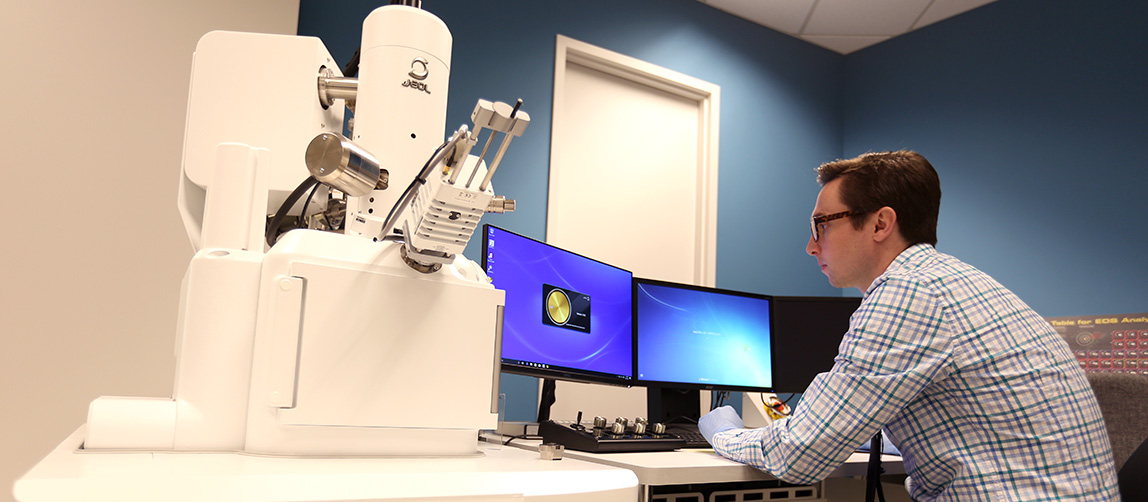
McCrone Associates uses a Cameca Instruments ims-4f secondary ion mass spectrometer (SIMS). This UHV instrument can produce oxygen, argon and cesium primary ion beams and uses a magnetic sector mass spectrometer to analyze secondary ions of masses 0-280 amu. The instrument can perform high sensitivity surface elemental analysis and depth profiles and is equipped with a resistive anode encoder for elemental imaging and mapping.
| Attachment | Size |
|---|---|
| SIMS Analytical Datasheet | 584.07 KB |